


During the last bad haze, Mr Faizal (not his real name) could not work out why his eyes felt so awful. Every afternoon at his outdoor stall, they turned red and gritty, as if he had been chopping onions all day. By evening they watered constantly, and rubbing them only made things worse. He put it down to tiredness, then to his contact lenses, then to age. It was only when he mentioned it to his daughter that she pointed out the obvious: the sky had been grey for a week, and the air-quality readings on her phone had been in the unhealthy range the whole time.
When the haze rolls in, eye clinics across Singapore see more people with exactly these complaints, and many of them, like Mr Faizal, do not connect the two at first. The eye is one of the few parts of the body left directly exposed to the air, protected only by a thin film of tears, so it feels bad air quickly.
Understanding what the haze is doing to your eyes, and which conditions it tends to stir up, makes it far easier to protect them. How would you know when a gritty, red eye is a simple irritation and when it is something that needs looking at? Here is what happens, and what to do.
Can Haze Really Affect Your Eyes?
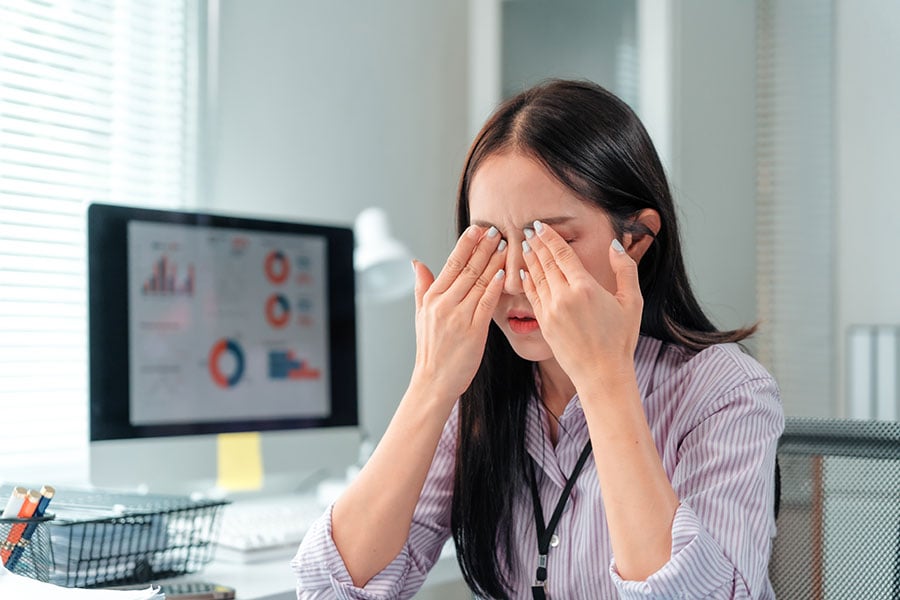
Yes. The fine particles in haze, particularly PM2.5, settle on the surface of the eye and can irritate and inflame it. This disturbs the tear film, the thin layer that keeps the eye smooth and comfortable, causing redness, grittiness, watering, and a burning or foreign-body feeling, especially in people who already have sensitive or dry eyes. (Systematic review, 2024)
“The eye has no filter against the air the way the nose does, so haze reaches it directly,” says Dr Allan Fong of Angel Eye & Cataract Centre. For most people it is temporary irritation, but for those with dry eye or allergies it can be a real flare. A systematic review of the evidence links airborne particles to a range of ocular surface problems, driven by inflammation and oxidative stress.
Haze and Dry, Irritated Eyes
What to watch for:
- Gritty, stinging, or tired eyes that feel worse outdoors
- Eyes that feel drier if you wear contact lenses or use screens a lot
- Redness and watering that ease once you are indoors
Haze and Allergic Conjunctivitis
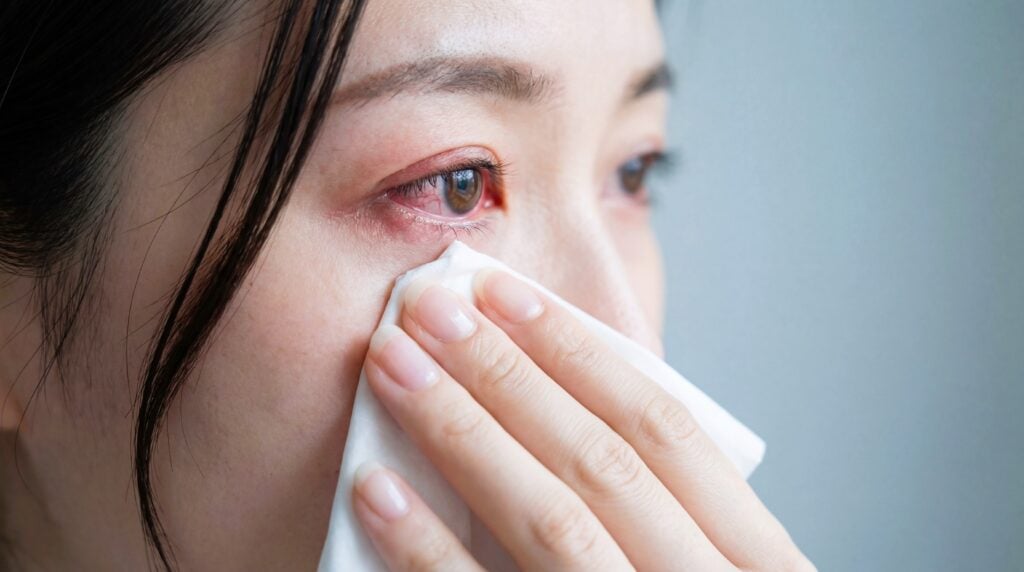
Haze can trigger or worsen allergic conjunctivitis, the itchy, red, watery reaction many people know from dust or pollen. The particles act as irritants and can provoke an allergic-type response on the surface of the eye, causing intense itching, redness, swelling, and a stringy discharge. (Mimura et al., 2020)
What to watch for:
- Intense itching, which is the hallmark of allergy
- Red, swollen, watery eyes with a stringy discharge
- A strong urge to rub, which makes it worse
Haze, Blepharitis, Styes and Chalazia
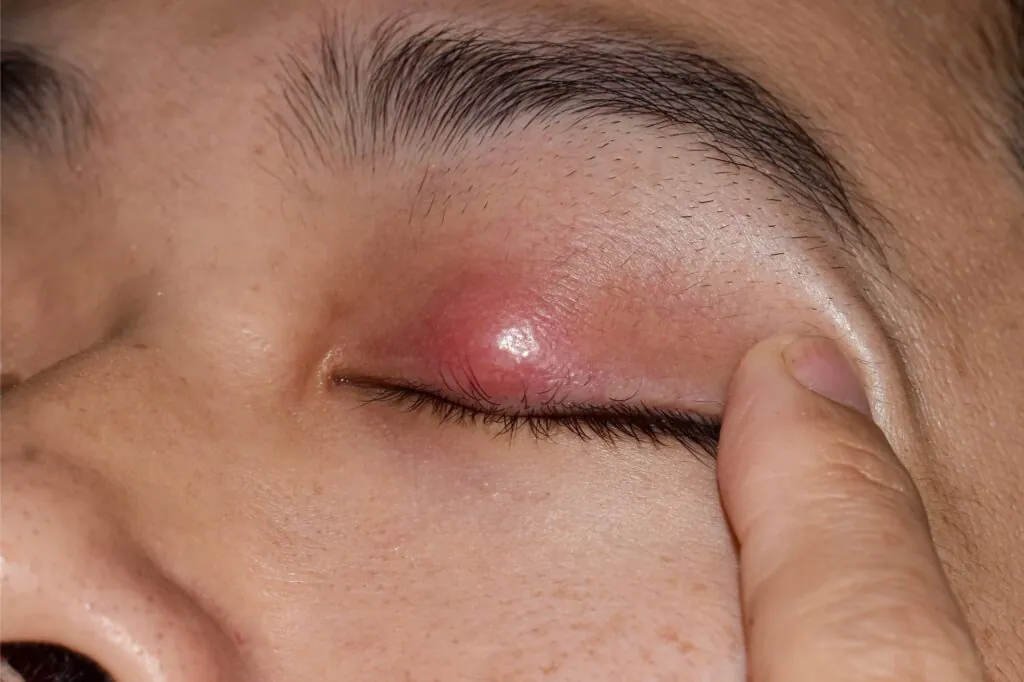
Haze can also aggravate eyelid conditions. Blepharitis, an inflammation of the eyelid margins, and meibomian gland dysfunction, where the oil glands in the lids do not work well, both tend to flare with airborne irritants. When these glands become blocked and inflamed, styes and chalazia, the tender lumps on the eyelid, are more likely to form. (Air pollution review, 2023)
Air pollution has been linked to dry eye, meibomian gland dysfunction, conjunctivitis, and blepharitis, and studies of everyday exposure show measurable effects on the tear film and eyelid glands. All of these share the same inflamed, blocked-gland picture that leads to styes and chalazia. Warm compresses and gentle lid hygiene, done daily, are the mainstay of keeping the eyelids settled during haze. A lump that is growing, very painful, or affecting vision should be seen rather than left.
What to watch for:
- Crusty, red, or itchy eyelid margins
- A tender lump forming on the eyelid
- Eyelids that feel worse first thing in the morning
Many of these flares are rooted in the same underlying problem. For more, see our guide to dry eye and how it is treated, which covers the day-to-day measures that help.
Frequently Asked Questions About Haze and Your Eyes in Singapore
How do I protect my eyes during the haze in Singapore?
Stay indoors with cleaner air when readings are unhealthy, use preservative-free lubricating drops to rinse and soothe the surface, cut down on contact lens wear, wear wrap-around glasses outdoors, and avoid rubbing. If irritation persists once the air clears, see an eye doctor.
Can haze cause an eye infection?
Haze mainly irritates and inflames the eye rather than infecting it, but the irritation, blocked eyelid glands, and rubbing it can encourage styes and, occasionally, infections more likely. Pain, thick discharge, or vision changes suggest more than irritation and should be checked.
Are contact lens wearers more affected by haze?
Often yes. Lenses can trap particles against the eye and worsen dryness during haze. Switching to glasses, or at least reducing wear and using preservative-free lubricants, helps. If your eyes stay red or uncomfortable in lenses during a hazy spell, give them a break and have them checked.
When to Seek Help
See an eye doctor, rather than wait it out, if you have any of the following:
- Eye pain, not just irritation
- A thick or coloured discharge
- Blurred vision or sensitivity to light
- A growing or very painful lump on the eyelid
- Symptoms that persist after the air has cleared
About Angel Eye & Cataract Centre
At Angel Eye & Cataract Centre, Dr Allan Fong and the team see and treat haze-related eye problems, from dry eye and allergic conjunctivitis to eyelid conditions, for patients across Singapore. As an eye specialist, Dr Allan Fong can tell the difference between simple irritation and something that needs treatment, and can help settle a flare quickly.
Eyes suffering through the haze?
Hazy weather passes, but the eye trouble it stirs up does not always settle on its own. If your eyes are red, gritty, or itchy through the haze and simple measures are not enough, it is worth getting them looked at. To have your eyes seen during the haze, contact Angel Eye & Cataract Centre.
Medical References
- Impact of particulate matter and air pollution on ocular surface disease: a systematic review of preclinical and clinical evidence. The Ocular Surface. 2024.
- Impact of fine particulate matter (PM2.5) on ocular health among people living in Chiang Mai. Scientific Reports. 2025.
- Air pollutant particulate matter 2.5 induces dry eye syndrome in mice. Scientific Reports. 2018.
- Exposure to traffic-related particulate matter 2.5 triggers a Th2-dominant ocular immune response in a murine model.
- PM2.5 exposure increases dry eye disease risks through corneal epithelial inflammation and mitochondrial dysfunction. Cell Biology and Toxicology. 2023.
- Research advances in pathogenic mechanisms underlying air pollution-induced ocular surface diseases.
- Real-life assessment of multi-pollutant exposure and its impact on the ocular surface (the Bike-Eye pilot study).
