


Summary:
- Eye allergies cause itchy, red, watery eyes when the immune system reacts to airborne particles
- The most common Singapore triggers are dust mites, pet dander, mould, pollen, and chemical irritants
- Symptoms in both eyes with intense itching point to allergy; one eye with thick discharge points to infection
- An eye clinic in Singapore can identify your specific trigger and prescribe treatment beyond over-the-counter drops
Priya (not her real name) blamed the pillow first.
She had bought it on a whim during a 11.11 sale, a memory foam one with a cooling cover, and within a week she was waking up with both eyes itchy and pink at the rims. She returned the pillow. The itching continued. She tried a different laundry detergent, then a different face cream, then stopped wearing eye makeup for a month. Nothing worked.
For nearly four months, Priya cycled through pharmacy eye drops, antihistamine tablets, and a quiet suspicion that she had developed an infection she could not get rid of. She was thirty-four, worked from home in a Bukit Timah condo, and had two cats she had never had problems with.
It turned out she was not allergic to the cats. She was allergic to the dust mites in her mattress, which had quietly multiplied during a year of working from home, sleeping later and washing her bedding less often than she used to. The new pillow had simply made it worse.
The reason this matters is that eye allergies in Singapore are rarely about one thing. Most patients who walk into an eye clinic with itchy, red, watery eyes have already spent weeks or months testing their own theories. By the time they ask for help, they have ruled out everything except the actual cause.
Here is what tends to be going on, and how an eye clinic in Singapore goes about working it out. Book a consultation with us today.
What Is an Eye Allergy, Exactly?
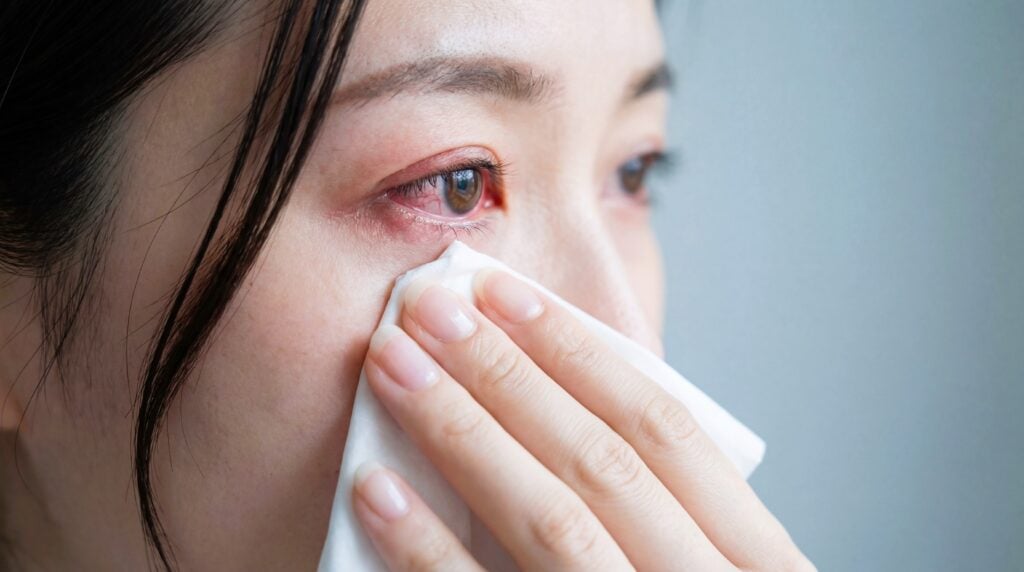
Eye allergies, known clinically as allergic conjunctivitis, occur when your immune system overreacts to something harmless. Dust. Pollen. Pet dander. Your body misreads the substance as a threat, releases histamine, and the conjunctiva, the thin, clear tissue covering the white of your eye, becomes inflamed.
That inflammation is what you feel as:
- Itching, often intense
- Redness across the white of the eye
- Watery eyes, with a clear discharge rather than a thick one
- Swollen or puffy eyelids
- A gritty, burning sensation that comes and goes
The itching is usually the giveaway. Infections tend to feel sore or sticky. Allergies tend to feel itchy in a way that makes you want to rub your eyes, which is also the worst thing you can do, because rubbing releases more histamine, and the cycle continues.
What to watch for:
- Symptoms in both eyes at the same time, rather than in one eye
- Itching that gets worse when you rub, not better
- Watery discharge that is clear, not thick or yellow
- A pattern that shifts with where you are or what you are doing
Why Is Singapore So Hard on Sensitive Eyes?
Singapore sits on the equator, with year-round humidity that regularly exceeds 80% outdoors. That humidity is excellent for one thing in particular: dust mites.
Dust mites are microscopic organisms that live in mattresses, pillows, sofas, soft toys, and carpets. You cannot see them. They do not bite. The problem is the proteins in their waste particles, which become airborne every time you make your bed, plump a cushion, or sit down on the sofa. For people who are sensitive to those proteins, the immune system reacts, and the eyes feel it first.
Studies in tropical Asian populations consistently identify house dust mites as the most common indoor allergen, with sensitisation rates significantly higher than in cooler, drier climates. The combination of warm temperatures, high humidity, and the way many Singaporean homes are sealed up for air-conditioning creates conditions where dust mite populations flourish quietly in fabric.
You will often notice it most:
- First thing in the morning, when you have spent the night next to an allergen-rich pillow
- When cleaning, vacuuming, or changing bed linen
- In rooms that are heavily carpeted or full of soft furnishings
- Less so when you are out of the house for the day
If your eyes feel best between 11 am and 6 pm and worst at the bookends of the day, dust mites are worth asking about at an eye clinic in Singapore.
What Else Could Be Triggering It?
Dust mites are the most common culprit in Singapore, but they are far from the only ones.
Pet dander
Cats and dogs shed microscopic flakes of skin, and the proteins in their saliva and skin can stay airborne for hours. Pet dander clings to sofa fabric, curtains, and clothing, so you can react to it even when the animal is in another room. Some people develop a tolerance to a pet they have lived with for years, then react suddenly when a friend’s pet visits, or when their own pet starts sleeping in a new spot.
Pollen and plant allergens
Singapore does not have the dramatic seasonal pollen counts of temperate countries, but local flowering trees, grasses, and weeds release pollen year-round. The Casuarina, oil palm, and several common ornamental species can trigger reactions in sensitive individuals. People who get itchy eyes after walking through certain parks or stretches of greenery are sometimes told there is no pollen in Singapore. There is. It just does not spike in the way it does in Sydney or London.
Mould spores
The same humidity that suits dust mites also suits mould. Bathrooms, under-sink cabinets, behind heavy furniture pushed against external walls, and air-conditioning units that have not been serviced in a while are all favourite spots. If your eye symptoms flare when you switch on a particular fan or air conditioning unit, it is worth checking what is inside it.
Cockroach allergens
In dense urban housing, proteins from cockroach droppings and shed exoskeletons act as a significant allergen for some people. This is particularly common in older estates and ground-floor units near rubbish chutes.
Chemical irritants
These are not strictly allergies; they are irritant reactions, but they look and feel almost identical. Common offenders:
- Perfume, especially when sprayed onto the neck or chest, where it drifts upward
- Scented candles, reed diffusers, and plug-in fragrances
- Eye makeup, especially mascara and eyeliner, that gets close to the lash line
- Contact lens solutions, particularly multi-purpose ones with preservatives
- Hair products that get rinsed close to the face
Smoke
Cigarette smoke, vape clouds, joss stick smoke during festive periods, and outdoor pollution during haze months all irritate the conjunctiva directly. If you have an underlying allergy, smoke exposure tends to make symptoms noticeably worse for the next day or two.
For more on triggers and treatment options, see our full allergy resource.
Is It an Allergy, or Is It an Infection?
This is the question that sends most people to a pharmacy with the wrong product. The two conditions overlap in symptoms but differ in important ways, and the wrong treatment can prolong the discomfort for weeks.
| Sign | More likely allergy | More likely infection |
|---|---|---|
| Itching | Intense, often the main symptom | Mild or absent |
| Discharge | Clear, watery | Thick, yellow or green |
| Affected eyes | Usually both | Often starts in one |
| Eyelids stuck on waking | Rare | Common |
| Pattern | Linked to the environment or trigger | Steady, does not depend on surroundings |
| Response to antihistamines | Improves | No change |
If you wake up with your lashes crusted together, or with thick discharge that returns within hours of wiping it away, that is pointing toward infection, not allergy. If your eyes are itching so badly you want to rub them, and antihistamines help, that is pointing toward an allergy.
The honest answer is that even experienced clinicians sometimes need to examine the eye surface under magnification to tell the two apart with confidence. If you have been treating symptoms for more than a week with no improvement, that is the point to stop guessing.
Book a consultation with our eye clinic in Singapore.
When Should You See an Eye Clinic in Singapore?
Mild allergic conjunctivitis often settles with environmental changes and a short course of over-the-counter antihistamine drops. The question is not whether to ever seek help, but when.
It is worth booking an appointment with an eye clinic in Singapore if:
- Symptoms have lasted longer than two weeks despite home measures
- You are reaching for antihistamine drops more than twice a day, every day
- Your vision is affected, even mildly
- You wear contact lenses, and your eyes are no longer tolerating them
- You have started avoiding work, screens, or sleep because of the discomfort
- The eyelids are visibly swollen, or the skin around the eyes has become flaky and red
- Symptoms keep returning even after you think you have identified the trigger
That last one is the most common reason patients eventually come in. They have figured out one trigger, removed it, felt better for a few weeks, and then watched the symptoms return without an obvious cause. Eye allergies are often layered, and identifying the second and third triggers usually requires more than self-diagnosis.
What Actually Helps in the Long Term?
There are two parts to treating eye allergies properly: reducing the load of allergens reaching the eye, and calming the immune response itself.
The environmental part matters more than people realise. Washing bedding weekly in water above 60°C, using allergen-proof mattress and pillow covers, vacuuming with a HEPA-filter machine, and avoiding heavy carpeting in bedrooms can substantially reduce dust mite exposure. For pet allergies, keeping pets out of the bedroom and washing hands and face after handling them helps more than people expect.
On the medical side, the right treatment depends on what is driving the symptoms. An eye clinic in Singapore will typically examine the surface of the eye, the conjunctiva, and the eyelid margins, and may use staining or imaging to rule out related conditions like dry eye disease or blepharitis, which often coexist with allergy and need to be treated in parallel. Treatment may then include:
- Preservative-free antihistamine drops for daily use
- Mast cell stabiliser drops, which prevent the allergic reaction rather than just treating it after the fact
- A short course of anti-inflammatory drops for severe flares
- Artificial tears to flush allergens off the eye surface
- Identifying and treating any concurrent dry eye, which makes allergy symptoms harder to control
The aim is not to keep treating symptoms forever. The aim is to bring the eyes back to a stable baseline, then step down to the minimum treatment that keeps them comfortable.
Getting Your Eye Allergies Properly Assessed
If your eyes have been itching, watering, or staying stubbornly pink for longer than they should, an examination by an eye clinic in Singapore will usually give you a clearer answer in one visit than weeks of home experimentation.
At Angel Eye & Cataract Centre, Dr Allan Fong assesses the surface of the eye, the conjunctiva, and the eyelid margins, and looks for the overlapping conditions, dry eye, blepharitis, contact lens-related changes, that often turn a simple allergy into a months-long problem. Where allergic conjunctivitis is confirmed, treatment is tailored to the trigger, the severity, and how the symptoms are affecting daily life.
Arrange an assessment with Dr Allan Fong and stop guessing at what your eyes are reacting to.
