


Summary
An eye injury can seem to heal completely, then cause trouble many years later. A blunt knock from a shuttlecock, a ball or a fall can damage the lens inside the eye. That damage may cloud the lens straight away, or slowly over decades.
This is called a traumatic cataract. Once it affects daily vision, eye cataract surgery is the usual treatment, because no medicine can clear a clouded lens. Surgery after an old injury needs extra planning, as the fibres holding the lens in place may also be weakened.
In Singapore, about one in twenty adults over 40 recalls a past eye injury, and men are affected far more often than women. Many people never connect a blurry eye at 50 with a knock at 25. Read on for the full picture.
At a glance
- An old eye injury can lead to a cataract months or even decades later.
- Blunt injuries, from shuttlecocks to falls, are a common cause.
- Surgery after trauma may need extra planning to support the lens.
- Protective eyewear prevents most sports and workplace eye injuries.
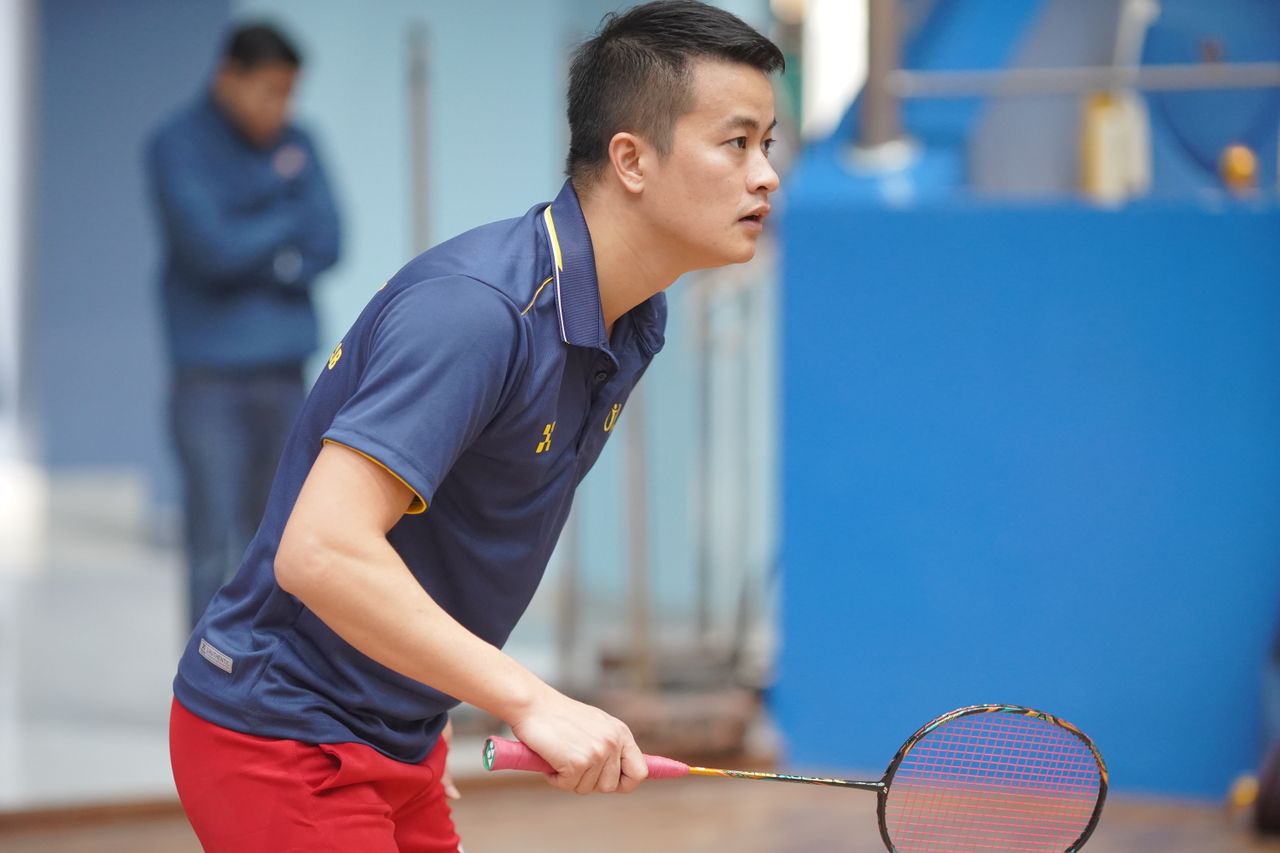
The shuttlecock came off his friend’s racket at full speed. Ryan (not his real name) was 25, playing doubles at a community club in Toa Payoh. It struck his right eye with a sharp crack he still remembers.
His eye swelled and watered for a week. A doctor checked it, prescribed drops and told him he had been lucky. Within a month his vision felt normal again, and he forgot about it.
Twenty-five years later, Ryan works in logistics and drives the CTE most mornings. Lately his right eye sees the world through a faint haze. Headlights flare more than they used to, and reading his phone feels harder with one eye closed.
He assumed it was age. His left eye still saw well, so from day to day he barely noticed. Then, rubbing his left eye on the MRT one evening, he saw how blurred the right had become.
That night, his wife asked whether it could be linked to that old injury. Ryan laughed, then stopped. Before bed, he looked up an eye clinic and booked an appointment.
Here is what may have been happening inside his right eye.
What Is a Traumatic Cataract?
A traumatic cataract is clouding of the eye’s lens caused by an injury. A blunt blow briefly compresses and stretches the eye, which can damage the lens or its outer capsule. The clouding may appear within hours, or develop slowly over months or years after the eye seems to have healed.
Estimates suggest that between a quarter and two thirds of significant eye injuries lead to some degree of cataract. The lens can also shift slightly out of position if its supporting fibres are torn.
A blunt injury can affect the lens in several ways:
- A patch of damage in the lens that slowly turns cloudy
- Clouding that spreads in a rosette or star-like pattern
- Torn or stretched fibres that let the lens wobble or tilt
- Clouding that only becomes noticeable years later

Many people never link a cloudy eye to an injury from their twenties. When one eye is much worse than the other, mention any old knock, sports injury or work accident. The history often explains what the examination finds.
What the doctor looks for
- Clouding in one eye only, which can point towards a past injury
- Signs that the lens has shifted or moves when the eye moves
- Pigment marks or scars left by an earlier blow
- The health of the retina, which trauma can also affect
How Common Are Eye Injuries in Singapore?
Eye injuries are more common than many people realise. Large Singapore eye studies found that about 4 to 5% of adults over 40 recalled a past eye injury. Men were roughly two to five times more likely than women to have had one, and blunt objects caused about a third of injuries.
Two settings account for many of these injuries:
- Sport: in a review of badminton eye injuries, shuttlecocks caused 85% of cases, almost all of them blunt injuries
- Work: at Singapore General Hospital, most emergency eye injuries were work-related, and only about one in five injured workers wore eye protection
Ryan’s injury fits this pattern closely: a fast shuttlecock, a doubles game and no eye protection. With more Singaporeans living into their eighties, an injury in youth also has more years in which to cause trouble.

SINGAPORE AT A GLANCE
Singapore is now a super-aged society: 21.4% of citizens were aged 65 and above in June 2026.
That is up from 13.7% a decade earlier, and the number of citizens aged 80 and above has risen by 60% over the same period.
What to watch for
- Blurred or hazy vision in an eye that was injured before
- More glare from headlights in that eye than in the other
- Double or ghost images when looking through one eye
- Vision that seems fine only because the other eye is covering for it
What Is Different About Eye Cataract Surgery After an Injury?
Eye cataract surgery after an injury follows the same basic steps as routine surgery. The cloudy lens is removed and replaced with a clear artificial lens. However, an old injury may have weakened the fibres that support the lens, so the surgeon may plan extra steps or devices.
Where some support has been lost, a small ring placed inside the lens capsule can help hold it steady. In some eyes, the new lens may need to sit in a different position.
The result also depends on the rest of the eye. Injuries can affect the retina and other structures, so a full examination comes first. Assessment before surgery usually covers:
- The position of the lens and the strength of its supporting fibres
- The retina and optic nerve, which can carry damage of their own
- Eye pressure and the shape of the front of the eye
- Measurements to choose a suitable lens implant

Can You Prevent an Eye Injury Cataract?
You cannot undo an old injury, but you can lower the chance of a new one. Protective eyewear prevents most sports and workplace eye injuries. The American Academy of Ophthalmology states that about 90% of eye injuries can be prevented with suitable protective eyewear.
For racquet sports, the Academy recommends eyewear with polycarbonate lenses. At work, safety glasses only help when they are worn. In the Singapore hospital study, many injured workers had been given eye protection but were not using it.
Goggles might have spared Ryan’s eye that evening in Toa Payoh. What he can do now is have the eye examined properly, and mention the old injury at every check.

What to watch for
- Wear sports goggles for badminton, squash and other racquet sports
- Use safety glasses for grinding, drilling, cutting or hammering
- Have any significant eye injury checked, even if it seems to settle
- Mention old eye injuries at every eye examination
Frequently Asked Questions About Eye Cataract Surgery After an Injury
Can a cataract form years after an eye injury?
Yes. A blunt injury can damage the lens without clouding it straight away. In some people, a cataract develops months or even decades later, long after the eye seemed to heal. Anyone in Singapore with a past eye injury should mention it at every eye check.
Is eye cataract surgery more difficult if I injured my eye before?
It can be more complex, because an injury may have weakened the fibres that hold the lens. Surgeons look for this beforehand and can use supporting devices if needed. The final result also depends on whether other parts of the eye were damaged.
Should I wear goggles for badminton in Singapore?
Protective eyewear is recommended for racquet sports. Shuttlecocks cause most badminton eye injuries, and almost all of these are blunt injuries. Sports goggles with polycarbonate lenses lower that risk.
When Should You Get an Old Eye Injury Checked?
Some symptoms should not wait for a routine visit. Arrange a check promptly if you notice any of the following:
Worth seeing sooner
- New or worsening blur in an eye that was injured before
- A sudden change in vision after any knock to the eye
- Pain, redness or swelling that does not settle after an injury
- Flashes, new floaters or a shadow across your vision
- Double vision when looking through one eye
Any eye injury with sudden vision loss, a cut to the eye or a shadow across your sight should be seen the same day.
You do not need to wait for symptoms to worsen before booking. A typical visit runs like this:
Your visit, step by step
- A conversation about your eye history, including any past injuries
- Vision and prescription checks, and a measurement of eye pressure
- A close examination of the lens and retina, usually after dilating drops
- A clear explanation of the findings, and whether surgery would help
Before you book
- Note when and how any past eye injury happened
- Bring your current glasses and a list of your medicines
- Arrange transport home, as dilating drops blur vision for a few hours
- Bring any previous eye reports or scan results
About Angel Eye & Cataract Centre
Angel Eye & Cataract Centre is an eye clinic in Singapore led by Dr Allan Fong. He is a senior consultant ophthalmologist and eye specialist with many years of experience in cataract and general eye care. The clinic provides comprehensive eye examinations, cataract assessment and surgery, and the diagnosis and management of common eye conditions.
Where specialised treatment is required, patients are referred onwards. Where surgery is appropriate, cataract removal is carried out as a procedure under local anaesthesia with IV sedation.
Dr Allan Fong and the team emphasise clear explanations, so patients understand what has been found and their options. As an eye specialist practice, it sees patients with new symptoms as well as those with an old eye injury.
If one eye has been hazier than the other since an old injury, it is worth having it examined. Dr Allan Fong is an eye specialist at Angel Eye & Cataract Centre, Royal Square Medical Centre, Novena. You are welcome to book an assessment for eye cataract surgery with him there.
Medical References
- Okoye GS, Gurnani B. Traumatic Cataract. In: StatPearls [Internet]. Treasure Island (FL): StatPearls Publishing; updated 27 August 2023. NBK594251. ncbi.nlm.nih.gov
- Cobbs L, DelMonte DW, Murchison A, et al. Traumatic Cataract Surgery. EyeWiki. American Academy of Ophthalmology; 2026. eyewiki.aao.org
- National Eye Institute. Cataracts. Bethesda (MD): NEI; updated 15 November 2023. nei.nih.gov
- Wong MYZ, Man REK, Gupta P, et al. Prevalence, subtypes, severity and determinants of ocular trauma: the Singapore Chinese Eye Study. Br J Ophthalmol. 2018;102(2):204-9. DOI 10.1136/bjophthalmol-2017-310564. PMID 28625972. bjo.bmj.com
- Chua D, Wong W, Lamoureux EL, et al. The prevalence and risk factors of ocular trauma: the Singapore Indian Eye Study. Ophthalmic Epidemiol. 2011;18(6):281-7. DOI 10.3109/09286586.2011.628775. PMID 22053838. doi.org
- Loon SC, Tay WT, Saw SM, et al. Prevalence and risk factors of ocular trauma in an urban south-east Asian population: the Singapore Malay Eye Study. Clin Exp Ophthalmol. 2009;37(4):362-7. DOI 10.1111/j.1442-9071.2009.02035.x. doi.org
- Hoskin AK, Watson S, Tengku Kamalden TAF. Badminton-related eye injuries: a systematic review. Inj Prev. 2023;29(2):116-20. DOI 10.1136/ip-2022-044564. doi.org
- Voon LW, See J, Wong TY. The epidemiology of ocular trauma in Singapore: perspective from the emergency service of a large tertiary hospital. Eye (Lond). 2001;15(Pt 1):75-81. DOI 10.1038/eye.2001.18. PMID 11318302. doi.org
- National Population and Talent Division, Prime Minister’s Office, et al. Population in Brief 2026. September 2026. isomer-user-content.by.gov.sg
- The Straits Times. Singapore now a super-aged society, with 21.4% of citizen population aged 65 and older. September 2026. straitstimes.com
- American Academy of Ophthalmology. Eye protection prevents athletes from eye injury. News release. San Francisco: AAO. Accessed 14 October 2026. aao.org
